


Overview
Vauxhall Motors is part of the Netherlands based Stellantis N.V., which was formed by the merger of Fiat Chrysler Automobiles (Italian/ American) and Groupe PSA (French). You may not be familiar with these names, but the automotive brands in the portfolio would be well known to most consumers.
These include: Maserati, Opel, Peugeot, Jeep, FIAT, Alfa Romeo etc. The Vauxhall electric vehicle (EV) portfolio includes both, battery-electric vehicle (BEV) and plug-in hybrid electric vehicle (PHEV) models:
- All-Electric Vauxhall Mokka-e SUV
- All-Electric Vauxhall Corsa-e Hatchback
- Vauxhall Grandland Plug-In Hybrid SUV
- Vauxhall Astra Sports Tourer Plug-In Hybrid
- Vauxhall Astra Plug-In Hybrid
- Vauxhall Combo Life Electric
- Vauxhall Vivaro Life Electric
Electric Cars: The Basics
For those of you new to zero-emission electric driving, we recommend a read of the following articles:
Types Of Electric Cars: The Complete Electric Car Buying Guide For The UK
Overview Vauxhall Motors is part of the Netherlands based Stellantis N.V., which was formed by the merger of Fiat Chrysler Automobiles (Italian/ American) and Groupe PSA (French). You may…
Read More
Electric Cars: Pros And Cons: The Complete Electric Car Buying Guide For The UK
Overview Vauxhall Motors is part of the Netherlands based Stellantis N.V., which was formed by the merger of Fiat Chrysler Automobiles (Italian/ American) and Groupe PSA (French). You may…
Read More
Top Jargons Used For Electric Driving: The Complete Electric Car Buying Guide For The UK
Overview Vauxhall Motors is part of the Netherlands based Stellantis N.V., which was formed by the merger of Fiat Chrysler Automobiles (Italian/ American) and Groupe PSA (French). You may…
Read More
Air Quality: The Complete Guide For The UK
Overview Vauxhall Motors is part of the Netherlands based Stellantis N.V., which was formed by the merger of Fiat Chrysler Automobiles (Italian/ American) and Groupe PSA (French). You may…
Read More
Are Electric Vehicles (EVs) A New Invention? The Complete Electric Car Buying Guide For The UK
Overview Vauxhall Motors is part of the Netherlands based Stellantis N.V., which was formed by the merger of Fiat Chrysler Automobiles (Italian/ American) and Groupe PSA (French). You may…
Read MoreSign up to the e-zoomed Electric Living newsletter
The Vauxhall Astra Hybrid-e Hatchback
The ubiquitous Vauxhall Astra is a compact family car that was introduced in 1991. The latest generation (8th generation/ 2022 model) is available as a conventional internal combustion engine (ICE) and also as a plug-in hybrid electric vehicle (PHEV).
This is the first Astra PHEV! Vauxhall is expected to also introduce a pure electric variant in due course. The 2022 makeover has certainly made the exterior styling a lot more appealing, in particular, the new distinctive front and the two-tone roof. However, the improvements are not limited to the exterior. The interior has also been improved, to include two 10-inch screens called ‘Pure Panel’ and better material quality.
There is no doubt, in that, PHEVs have many advantages over conventional petrol and diesel cars. These include, lower tailpipe-emissions, cheaper costs per mile to drive (pure electric mode) and instant torque. For those individuals and families that use a car for several shorter trips, a PHEV is a fantastic way to save money and improve local air quality. To learn more about the charging costs for electric cars, simply follow this link.
The Astra plug-in hybrid electric hatchback has much to offer aspiring drivers keen to migrate to lower emission electric driving. For a start, the 12.4 kW onboard EV battery has a zero-tailpipe emission electric range up to 43 miles (WLTP certified). This is an above average EV range, compared to other PHEVs in this segment. Most average between 25 – 30 miles.
Even accounting for real-world driving conditions, the Astra electric car should be able to achieve a EV range up to 35 miles. Do keep in mind that the average journey in the UK is a mere 12 miles and the average distance covered in a day is 30 miles. Therefore, a 35 mile emission-free electric range is useful. The Astra PHEV has a 3.7kW onboard charger as standard (0%-100%: 3 hours 30 minutes). However, there is the option to upgrade to 7.4kW (0%-100%: 1 hour 55 minutes).
Taking advantage of the EV range will also require inculcating a habit of charging the EV on a regular basis, which again is as easy as charging a smartphone. We at e-zoomed discourage the use of a domestic 3-PIN plug for charging an electric car. A ‘topping up’ approach to charging will help improve the overall efficiency of the vehicle and also improve the long-term maintenance of the onboard EV battery. Vauxhall offers a 8 years or 100,000 miles warranty.
Driving on e-mode will also improve the efficiency of the EV. Vauxhall claims a fuel economy up to 256 mpg. In the real-world achieving this will be a challenge, however, the PHEV will deliver a better fuel economy compared to the conventional internal combustion engine (ICE) variant. Of course, if you are driving mostly on the motorway, with limited use of the electric range, the fuel consumption of the EV will be closer to the conventional ICE variant.
The Astra plug-in hybrid pairs a 1.6-litre (AT8) petrol engine with an electric motor (81 kW), powered by an onboard EV battery. In terms of performance, the front-wheel drive electric hatchback has decent capability for driving on motorways and in cities. The PHEV has a top speed of 140 mph and can achieve 0-60 mph in 7.7 seconds. The EV delivery a maximum 180 HP output (torque: 360 Nm).
We encourage drivers to use the pure electric mode to drive within city limits, to save money and reduce tailpipe pollution. The Astra PHEV has tailpipe emissions up to 26g (CO2/km), far lower than the petrol or diesel variant (128g CO2/km).
Moreover, company-car drivers can benefit from the lower Benefit-in-Kind (BiK) tax rate for the PHEV. The PHEV does not qualify for the UK government plug-in car grant (PiCG). Bottom-line, electric driving is good for the environment and the wallet. You can lease electric vehicles (EVs) via e-zoomed at very competitive prices!
| PROS | CONS |
|---|---|
| Good looking exterior design | 7.2 kW on board charger not standard (£500 including VAT) |
| Decent electric range (43 miles) | Rear seats headroom limited for taller passengers |
| High quality infotainment system | Boot space limited (352 L) |
Gallery


The Vauxhall Astra PHEV Hatchback (credit: Vauxhall)
| At A Glance | |
|---|---|
| EV Type: | Plug-In Hybrid Electric Vehicle (PHEV) |
| Body Type: | Hatchback |
| Plug-In Car Grant (PiCG): | Not Available |
| Engine: | Petrol/Electric |
| Available In UK: | Yes |
| Variants (2 Options) |
|---|
| Vauxhall Astra GS Line (from £32,700) |
| Vauxhall Astra Ultimate (from £35,815) |
| EV Battery & Emissions | |
|---|---|
| EV Battery Type: | Lithium-ion |
| EV Battery Capacity: | Available in one battery size: 12.4 kWh |
| Charging: | Onboard charger: 3.7 kW AC as standard (0%-100%: 3h 30m). 7.4 kW AC optional (0%-100%: 1h 55m) |
| Charge Port: | Type 2 |
| EV Cable Type: | Type 2 |
| Tailpipe Emissions: | 24 – 26 g (CO2/km) |
| EV Battery Warranty: | 8 years/100,000 miles/70% capacity |
| Average Cost Of Residential Charging | |
|---|---|
| Battery net capacity : 12.4 kWh | £3.27 |
| Battery net capacity : 16.7 kWh | £4.40 |
| Battery net capacity : 26.6 kWh | £7.01 |
| Battery net capacity : 30.0 kWh | £7.91 |
| Battery net capacity : 39.2 kWh | £10.33 |
| Battery net capacity : 45.0 kWh | £11.86 |
| Battery net capacity : 50.0 kWh | £13.18 |
| Battery net capacity : 64.0 kWh | £16.86 |
| Battery net capacity : 71.0 kWh | £18.71 |
| Battery net capacity : 77.0 kWh | £20.29 |
| Battery net capacity : 90.0 kWh | £23.72 |
| Battery net capacity : 100.0 kWh | £26.35 |
| Battery net capacity : 112.0 kWh | £29.51 |
| Battery net capacity : 120.0 kWh | £31.62 |
| Battery net capacity : 130.0 kWh | £34.26 |
- Note 1: The average cost of residential electricity in the UK varies depending on the region, supplier and type of energy used. An average for the UK is 26.35 p/kWh.
- Note 2: Not all EV manufactures make available the data on net EV battery capacity, and in a number of instances the EV battery capacity advertised, does not state if it is gross or net capacity. In general, usable EV battery capacity is between 85% to 95% of the gross available capacity. Best to charge an EV overnight when the rates are the lowest.
| Charging Times (Overview) | |
|---|---|
| Slow charging AC (3 kW – 3.6 kW): | 6 – 12 hours (dependent on size of EV battery & SOC) |
| Fast charging AC (7 kW – 22 kW): | 3 – 8 hours (dependent on size of EV battery & SoC) |
| Rapid charging AC (43 kW): | 0-80%: 20 mins to 60 mins (dependent on size of EV battery & SoC) |
| Rapid charging DC (50 kW+): | 0-80%: 20 mins to 60 mins (dependent on size of EV battery & SoC) |
| Ultra rapid charging DC (150 kW – 350 kW): | 0-80% : 20 mins to 40 mins (dependent on size of EV battery & SoC) |
| Tesla Supercharger (120 kW – 350 kW): | 0-80%: up to 25 mins (dependent on size of EV battery & SoC) |
- Note 1: SoC: state of charge
| Dimensions | |
|---|---|
| Height (mm): | 1441 |
| Width (mm): | 1860 |
| Length (mm): | 4374 |
| Wheelbase (mm): | 2675 |
| Turning Circle (m): | 10.5 |
| Boot Space (L): | 352 |
| HYBRID-e | |
|---|---|
| EV Battery Capacity: | 12.4 kWh |
| Pure Electric Range (WLTP): | 43 miles |
| Fuel Consumption (mpg): | 256 miles |
| EV Operation Efficiency (kWh/100km): | 16.0 |
| Charging: | Onboard charger: 3.7 kW AC as standard (0%-100%: 3h 30m). 7.4 kW AC optional (0%-100%: 1h 55m) |
| Top Speed: | 140 mph |
| 0-60 mph: | 7.7 seconds |
| Drive: | Front-wheel drive (FWD) |
| Electric Motor (kW): | 81 |
| Max Power (HP): | 180 |
| Torque (Nm): | 360 |
| Transmission: | Automatic |
| Seats: | 5 |
| Doors: | 5 |
| Kerb Weight (kg): | 1,678 |
| Colours: | 7 |
| NCAP Safety Rating: | Five-Star |
While e-zoomed uses reasonable efforts to provide accurate and up-to-date information, some of the information provided is gathered from third parties and has not been independently verified by e-zoomed. While the information from the third party sources is believed to be reliable, no warranty, express or implied, is made by e-zoomed regarding the accuracy, adequacy, completeness, legality, reliability or usefulness of any information. This disclaimer applies to both isolated and aggregate uses of this information.
Featured Articles

Ferrari SF90 Stradale Plug-In Hybrid (Coupé): The Complete Electric Car Buying Guide For The UK
Overview Vauxhall Motors is part of the Netherlands based Stellantis N.V., which was formed by the merger of Fiat Chrysler Automobiles (Italian/ American) and Groupe PSA (French). You may…
Read More
Best Electric Cars 2022: The Complete Electric Car Buying Guide For The UK
Overview Vauxhall Motors is part of the Netherlands based Stellantis N.V., which was formed by the merger of Fiat Chrysler Automobiles (Italian/ American) and Groupe PSA (French). You may…
Read More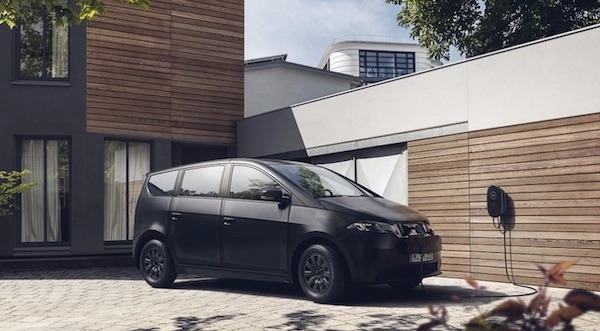
Sion Solar Electric Car: The Complete Electric Car Buying Guide For The UK
Overview Vauxhall Motors is part of the Netherlands based Stellantis N.V., which was formed by the merger of Fiat Chrysler Automobiles (Italian/ American) and Groupe PSA (French). You may…
Read More
Electric Car Grants 2022: Best Qualifying Cars
Overview Vauxhall Motors is part of the Netherlands based Stellantis N.V., which was formed by the merger of Fiat Chrysler Automobiles (Italian/ American) and Groupe PSA (French). You may…
Read More
The Lexus NX Plug-In Hybrid (SUV): The Complete Electric Car Buying Guide For The UK
Overview Vauxhall Motors is part of the Netherlands based Stellantis N.V., which was formed by the merger of Fiat Chrysler Automobiles (Italian/ American) and Groupe PSA (French). You may…
Read MoreFeatured Products
-
Best-In-Class Home Solar Bundle Offer (440W All Black Jinko Solar 8 Panels + Sungrow Hybrid Inverter 3.6 kW): price includes product supply only – free delivery
Original price was: £2,205.95.£2,150.95Current price is: £2,150.95. (Including VAT) -
Best-In-Class Home Solar Bundle Offer (440W All Black Jinko Solar 8 Panels + Sungrow Battery Storage 6.4 kWh + Sungrow Hybrid Inverter 3.6 kW): price includes product supply only – free delivery
Original price was: £5,010.95.£4,800.95Current price is: £4,800.95. (Including VAT) -
Bundle Offer: SUNSYNK LifePO4 Home Battery Storage (5.32 kWh) + SUNSYNK Hybrid Inverter (3.6 kW/Single-Phase): price includes product supply only – free delivery
Original price was: £3,345.95.£3,299.95Current price is: £3,299.95. (Including VAT) -
Bundle Offer: Tesla Powerwall 3 Home Battery Storage (13.5 kWh) + Gateway: price includes product supply only – free delivery
£8,559.95 (Including VAT) -
Custom-Made Single-Phase EV Charging Cable Type 2 to Type 2 (2m to 50m, 7.4 kW, 32 amp, Black) – Built & Tested In The UK – Free Delivery
Price range: £99.95 through £670.95 (Including VAT)Category:CablesType:Type 2Length (m):5 m7.5 m10 m3.5 m12.5 m15 m20 m17.5 m2 m22.5 m25 m30 m35 m40 m45 m50 mCurrent (amp):32 ampPhase:Single Phase (7.2kW)This product has multiple variants. The options may be chosen on the product page -
Untethered Ohme ePod Home Smart EV Charger (7.4 kW): price includes product only – free delivery
£645.95 (Including VAT)Brand:OhmeCategory:EV Charging PointsCustomer type:ResidentialPower:7.4 kWCable:UntetheredPhase:Single Phase


